

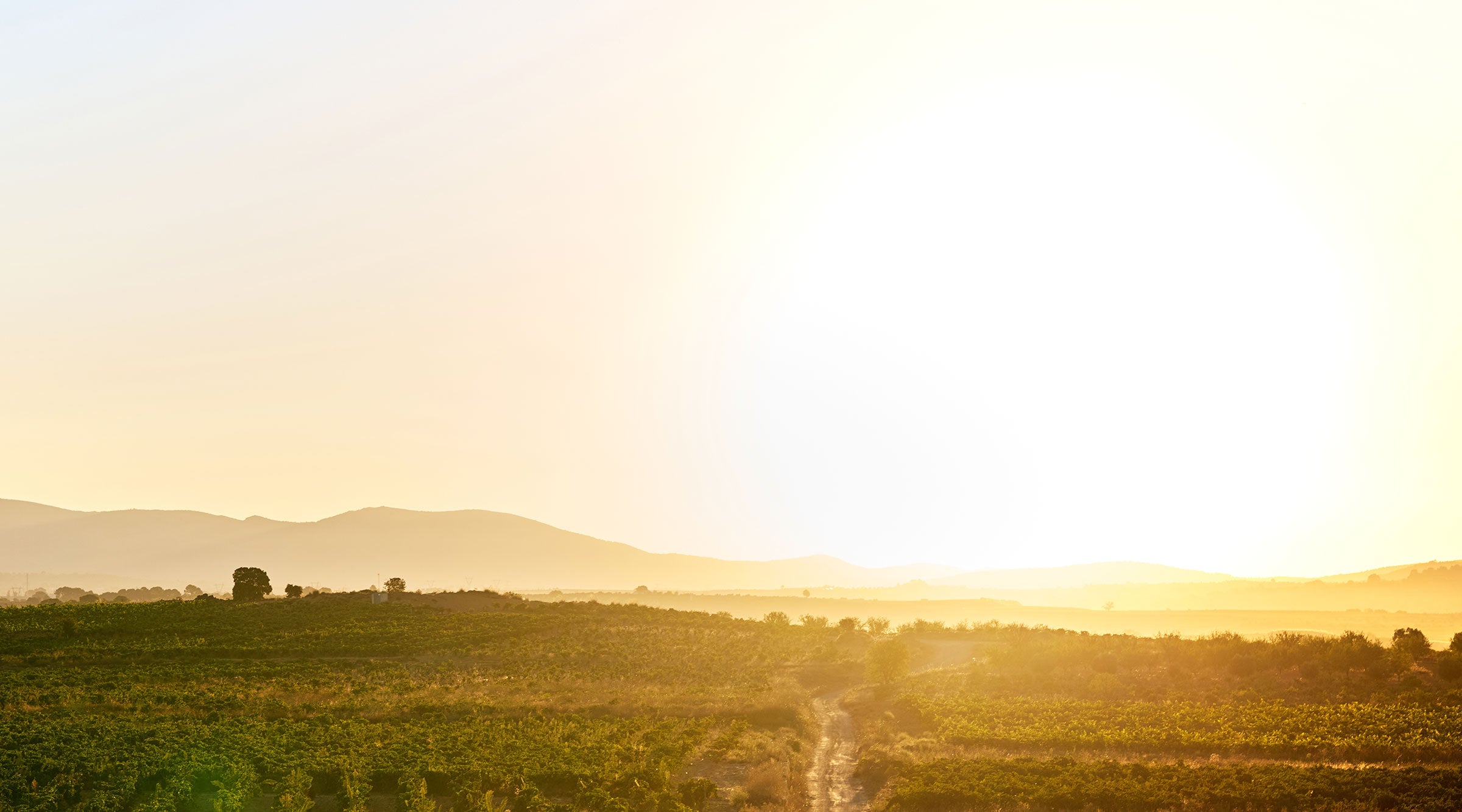
Permaculture, regenerative viticulture and minimal intervention winemaking. Why we chose this path and what it means for the land and for your glass.
In Spain's Utiel-Requena region, decades of industrial viticulture have left their mark: ploughed soils, monocultures, declining biodiversity. At Viña de Eufemia, we chose a different path.
Permaculture is not a label we apply to our wines. It is the design system behind every decision we make, from how we plant to how we press.

A vineyard that gives back
Conventional viticulture extracts. It takes nutrients from the soil, water from the aquifer, biodiversity from the landscape. Each year, the land gives a little less. Permaculture reverses this cycle. Instead of depleting, we design systems that regenerate: building soil, increasing water retention, creating habitat for wildlife.
For us, the question was never whether permaculture would work in a vineyard. The question was: why would we farm any other way?

An ancient technique, rediscovered
Between our vine rows, we plant olive and fruit trees. This practice, known as agroforestry, is one of the oldest agricultural techniques and one of the most effective. The trees provide shade, break up compacted subsoil and create a microclimate that benefits the vines year-round.
The foundation of everything
Healthy soil is not dirt. It is a living ecosystem. A single handful contains more microorganisms than there are people on Earth. Fungi, bacteria, nematodes and earthworms form networks that deliver nutrients to vine roots, retain water and build the soil structure that prevents erosion.
We never plough. We never use synthetic fertilisers or herbicides. Instead, we sow cover crops: grasses, legumes and wildflowers that protect the soil surface, fix nitrogen and feed the microbial communities below.
This is what we mean by suelos vivos, living soils. The foundation from which pure wines are born.

A vineyard is not a factory
Monoculture is fragile. We build resilience through diversity: wild herbs between the rows attract beneficial insects. The sheep and goats of a local shepherd graze the cover crops, fertilising naturally and keeping the vegetation in balance.
Birds nest in the olive trees. Lizards sun on the stone walls. Bees pollinate the wildflowers. None of this is romantic decoration. It is an integrated pest management system, designed by nature and tended by us.


Why we let the vineyard speak
If we respect the land in the vineyard, it makes no sense to strip its character away in the cellar. Our winemaking starts from a simple conviction: when the fruit is clean and the soil is alive, the winemaker's job is to step aside.
We ferment with indigenous yeasts, the wild cultures that live on our grapes and in our cellar. Fermentations take place in stainless steel tanks, ceramic eggs, foudres and barricas, depending on what best suits each grape variety and parcel. Each variety and each parcel is vinified and aged separately to preserve its identity. Barricas and foudres are used with great care, never to dominate, only to support the expression of the fruit and the place.
Sulphites are minimal and only used when necessary to protect or save a wine. We do not fine or filter unless truly needed.
This is what "natural wine" means to us: not a dogma, but a commitment to honesty. You taste what the vineyard produced, not what the winemaker added.
What you taste when the soil is alive
Permaculture produces better wine. When vines grow in healthy, biodiverse soil, their roots reach deeper. They find minerals and trace elements that shallow-rooted, irrigated vines will never access. The grapes are smaller, more concentrated, more complex.
Our Practices
No synthetic chemicals
No pesticides, herbicides or artificial fertilisers. Ever.
Cover crops year-round
Grasses, legumes and wildflowers protect and feed the soil.
Agroforestry
Olive and fruit trees create shade, wind protection and microclimate.
Animal integration
A local shepherd's flock grazes and fertilises naturally.
Indigenous yeasts
Wild fermentation from vineyard and cellar cultures.
Minimal sulphites
Added only when necessary. Alive, clean, free from additives.
