Our winery and its heritage

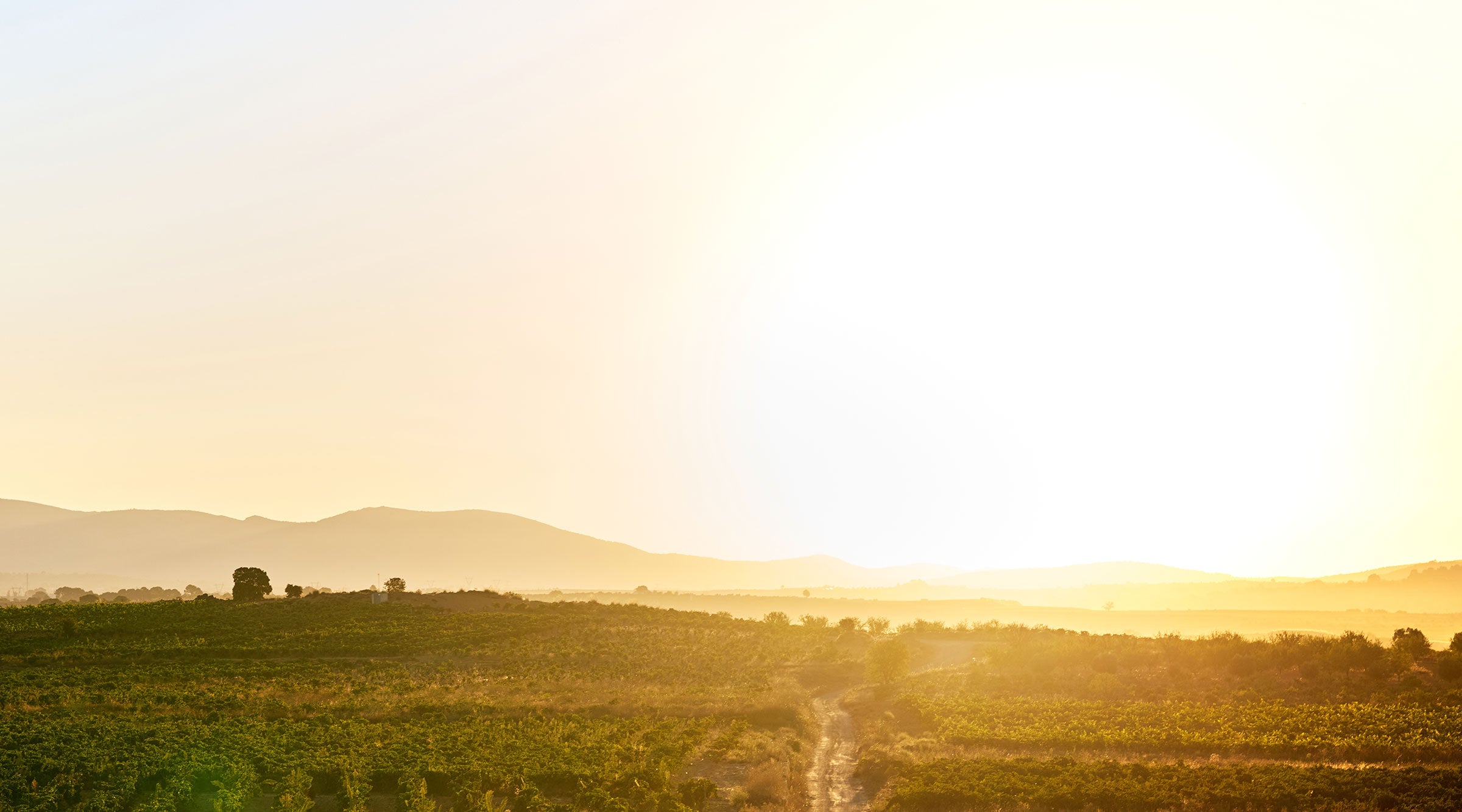
Heading inland from Valencia and crossing the Sierra de las Cabrillas, the humid coastal air gradually gives way to the dry clarity of the highlands. Beyond the mountains, the Requena plateau opens up. Here lies the small village of Casas de Eufemia, home to our winery: Viña de Eufemia.

When we first arrived, there was no winery, only rows of vines: Bobal, Macabeo, Xarel·lo and Tardana, some of them up to eighty years old. We chose this land not to start from scratch, but to build on what was already here.

Permaculture

A vineyard in balance

In recent decades, the Requena region has seen industrial viticulture: mechanised, ploughed, irrigated and pushed for yields. The soils suffered, biodiversity declined, balance was lost. With Viña de Eufemia, we want to do things differently.

We follow the principles of permaculture, working with the land rather than against it. Between the vine rows, we plant olive and fruit trees that provide shade and break the wind – an agroforestry system that grows gradually over time. Grasses, herbs and wild plants fill the spaces in between, increasing biodiversity and helping the soil retain water. The sheep and goats of a village shepherd keep the grass short and fertilise it naturally. We give the soil the time it needs to regenerate – practising a form of viticulture that not only protects the land, but rebuilds it and gives something back to it.

Grapes

Varieties with a past

At the heart of our work are the region’s autochthonous grape varieties. Bobal, long underestimated, is a powerful red variety deeply rooted in this landscape. And it is this diversity that embodies what we stand for. The white varieties Macabeo, Xarel·lo and Tardana have a long regional tradition, with the late-ripening Tardana known for the patience it requires in the vineyard.

To us, Viña de Eufemia is more than a winery. It is a place of transformation and a model for regenerative viticulture in this region. We return to the soil what we take from it. And this commitment shows in the wine itself: we want those who taste it to feel that things are done differently here — consciously, patiently and with respect for what came before.